Hey everyone,
I’ve been working on an experimental Fedora 44-based distro called GREYWARD for a while, mostly building the kind of Linux desktop I personally wanted to use.
I’ve reached the point where testing it on the same few machines and looking at it from the same perspective isn’t teaching me as much anymore, so I thought this might be a good place to share it and get some outside opinions.
The basic idea is:
stronger security and privacy defaults, but integrated into the desktop so you don’t need to constantly think like a Linux administrator to understand what the system is doing.
https://github.com/MANTIS-devlab/GREYWARD

Linux already has most of the pieces I’m interested in: SELinux, firewalld, NetworkManager, LUKS, Secure Boot, Flatpak permissions, USBGuard, Btrfs, OpenSnitch, etc.
What got me started was mostly how disconnected they can feel.
If I want to understand what my machine is actually doing, I often end up jumping between settings, terminal commands, configuration files and different utilities.
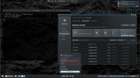
GREYWARD is my attempt to bring some of that together through its own desktop direction and a first-party Security Center, covering things like:
- network activity and application connections;
- firewall / NetworkManager / OpenSnitch state;
- VPN and DNS-aware network policy;
- Flatpak permissions;
- USB/removable-device controls;
- Secure Boot, LUKS and TPM status;
- system, Flatpak and firmware updates;
- file scanning;
- Btrfs recovery points and Restic backups.
I’m trying to reuse Fedora’s existing mechanisms wherever possible rather than replacing working components just to make them “GREYWARD”.
The project also has its own visual direction. I wanted the security parts to feel like a normal part of the desktop rather than something you only interact with through an admin panel or a collection of unrelated tools.
The current release is 0.1.1 alpha.
It boots, installs and is usable, but there’s still a lot I haven’t tested, especially once you move away from the small collection of hardware and VMs I have access to.
What I’m mostly curious about from people here is:
Does the general idea sound useful to you?
Would having this kind of security state integrated into the desktop solve an annoyance you have with existing distros, or does it feel like an extra layer you wouldn’t really want?
I’m interested in either answer, and especially in the reasons behind it.
If anyone feels like actually testing it, VM testing is completely useful, and spare hardware is even better.
NVIDIA laptops, hybrid graphics, weird Wi-Fi/Bluetooth, multiple displays, suspend/resume problems, unusual VPN/DNS setups and generally temperamental hardware are particularly interesting.
I’m also very interested in cases where GREYWARD looks correct but reality disagrees.
For example, if Security Center says something is protected while the underlying system state says otherwise, that’s a much more valuable bug to me than a cosmetic issue.
One other thing worth mentioning: a significant amount of the implementation has been produced with AI coding agents.
I define the architecture and intended behaviour, test it against the actual system and iterate on it heavily, but that also means outside technical review is particularly useful to me.
If you look at something and think there’s a much simpler Fedora-native way to do it, or that I’ve made a bad assumption somewhere, I genuinely want to hear it.
Source, screenshots, installation information and the current ISO:
https://github.com/MANTIS-devlab/GREYWARD
Even if you never install it, feedback on whether the basic direction makes sense is useful.
Source: r/FindMeALinuxDistro · by /u/kru3her69