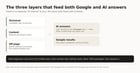
Every agency deck has a GEO or AEO slide now, and some are charging a separate line item for it. A fair amount of it is ordinary SEO with a new label.
Here is what the work actually consists of when it is real, the one question that settles it on a first call, and the contract terms that cost Indian founders the most money.
Quick answer if you're skimming
- Ask for one client they got cited in an AI answer and what the traffic did. No example means they are guessing.
- “LLM visibility tracking” is measurement, not a lever. Watching a number does not move it.
- Most of what gets you into AI answers is ordinary SEO plus brand mentions on sites the models already trust.
- Read the contract before the deck: lock-in length, and who owns your content and account logins when you leave.
- Domain Authority is a third-party vendor score, not something Google or any model uses. An agency leading with it is selling you a metric.
Is GEO/AEO actually a separate service, or is it SEO with a new name?
- Genuinely contested right now, and nobody has settled it. Be suspicious of anyone who says it is obvious.
- One camp: good SEO produces AI citations on its own. A marketer working on a large US kitchen brand put it plainly — they do not focus on AEO separately and do not charge above the usual SEO budget for it.
- Other camp: the real lever is off-site — mentions and coverage on sources the models already trust. That is digital PR work, not on-page work.
- Both camps agree on the base: a crawlable site, clean structure, and content that matches what people actually search.
- Practical read for a small business: treat it as a line item inside your existing SEO scope, not a second retainer.


What does the work consist of, if it is real?
- Clean technical fundamentals — crawlability, speed, structure. Nothing exotic.
- Entity consistency: your business described the same way everywhere — site, Google Business Profile, LinkedIn, directories, industry listings.
- Brand mentions on third-party sites the models treat as reliable. This is outreach and PR, not blog volume.
- Structured data, but only where it genuinely describes what is on the page.
- Note what is not on that list: buying an AI-visibility tool subscription and forwarding you the dashboard.


What is the single question that separates real from repackaged?
- Ask: show me one client you got into an AI Overview or a ChatGPT answer, and what the traffic lift looked like.
- If they cannot produce one, they are guessing on the AI side. That is the whole test.
- Follow-up one: who specifically will work on my account, by name — not “our team”.
- Follow-up two: what would you do in the first three months on my site specifically.
- Follow-up three: tell me about a client where it did not work, and why. This is the most revealing of the three. Everyone has failures; only honest operators will describe one.
How do I know the reporting is not made up?
- The measurement layer is genuinely unreliable right now, and you should know that before you buy it.
- Different AI-visibility tools return wildly different citation counts for the same domain — people are reporting gaps of several times over between two tools on one site.
- Allowing a crawler in robots.txt does not by itself make you eligible to appear in a given AI product's answers, and no tool reports cleanly on that gap.
- So ask which tool they use, and ask what they would do if a second tool disagreed with it five-fold.
- A good answer treats the number as directional. A bad answer treats it as truth.
Which contract terms actually bite?
- Lock-in length. A year's commitment before you can evaluate anything is common and unnecessary.
- Ownership of the content produced. If you leave in month five, do the articles go with you?
- Ownership of accounts — Search Console, Analytics, ad accounts, the CMS. Have these in your name from day one, not theirs.
- A real exit clause, not a ninety-day notice period that quietly buys them another quarter of fees.
- Deliverables written as outputs, not outcomes. “Four articles and two technical fixes a month” is checkable. “Improved visibility” is not.
Indian founders keep asking about paying everything upfront. Is that normal?
- The same complaint keeps surfacing: pay upfront, get a lead number promised, no guarantee, and no refund if nothing lands. One founder described it as paying for hope rather than results.
- Paying something upfront is normal — agencies have salaries to meet. Paying everything upfront against no defined deliverable is not.
- A reasonable structure: monthly in advance, a named deliverable list, and a thirty-day exit.
- Have a written contract even for small work. This cuts both ways — freelancers in the same threads report being paid half and told their contribution was worth nothing.
- The actual red flag is a guarantee of a specific number of leads or a number one ranking. Nobody controls either.
Agency, freelancer, or in-house — what makes sense for a small Indian business?
- Freelancer: cheapest, and the standard complaint is low visibility into what is actually being done. Works if you can specify the output and check it yourself.
- Agency: buys coverage across technical, content and off-page at once. Costs more, and part of what you pay for is coordination.
- In-house: makes most sense for content, once someone else has done the technical setup, because content needs someone who knows the product.
- A pattern that works: pay once for a technical fix-up, keep content in-house, and buy off-page work separately when you need it.
- Price reality in India runs from roughly ₹12,000 a month at the low end to retainers in lakhs. The low end is not automatically bad — it is simply less work, and you should know which you are buying.
What are the warning signs in the first meeting?
- Leading with Domain Authority as the goal. It is a vendor score that correlates loosely with old PageRank thinking, not an input to any live system.
- Proposing pages visible only to crawlers, or any “shadow” version of your content. That is cloaking, it risks your whole domain, and it is being pitched to clients right now.
- Targeting keywords with no search volume in your market. A great deal of budget dies here quietly.
- “We will handle everything, do not worry about the details.”Volume promises — forty blogs a month. Ask who writes them, then read one before you sign anything.
What gets sold versus what to ask for instead
| What gets sold | What it usually is | Ask for this instead |
|---|---|---|
| “LLM visibility tracking dashboard” | A tool subscription resold at a markup | The tool name, its list price, and access in your own account |
| “GEO package, extra fee per month” | Existing SEO work relabelled | It folded into the SEO scope at no premium |
| “AI-optimised content, 40 articles a month” | Volume that dilutes the site | Four articles you would put your own name on |
| “Schema implementation for AI” | Schema on pages that do not need it | Schema only where it describes real page content |
| “We will get you into ChatGPT answers” | Unfalsifiable | One past example, with the traffic number attached |
What I'd actually do
- Before any call, write down the three questions — one past AI-citation example, who works on the account by name, and one client where it did not work. Ask nothing else until those are answered.
- Do not buy GEO as a separate line item this year. Fold it into an SEO scope and make the deliverables things you can count at the end of the month.
- Get Search Console, Analytics and your CMS into your own name before a rupee moves. Most mistakes here are recoverable; losing access to your own data is not.

Source: r/u/growthlife410 · by /u/growthlife410