 |
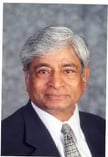
Introduction: The Quiet Architect of Computational MechanicsSome engineers achieve fame through structures the public can see — bridges, dams, skyscrapers that bear their names or become associated with their era. Chandrakant S. Desai's legacy operates differently. His influence lives inside the invisible scaffolding of modern engineering practice: the numerical methods, material models, and textbooks that other engineers use daily without necessarily knowing whose thinking shaped the tools in their hands. He was, in the truest sense, an engineer's engineer — a man whose seminal 1972 textbook helped introduce an entire English-speaking engineering world to the finite element method, and whose subsequent five decades of research reshaped how the profession understands the mechanical behavior of soil, rock, concrete, and a surprising range of other materials under stress. Desai passed away on March 28, 2025, in Tucson, Arizona, closing a career that stretched from a farming village in Gujarat to the highest faculty distinction the University of Arizona could bestow. This essay traces that arc — the formation of the engineer, the making of a foundational textbook, the development of an original and internationally adopted constitutive theory, and the institutional infrastructure he built to sustain a discipline. From Nadisar to Bombay: The Making of an EngineerDesai was born on November 24, 1936, in Nadisar, a farming village in Gujarat, India — a setting that, on its face, seems an improbable launching point for a career that would eventually touch nearly every corner of computational geomechanics. Rural Gujarat in the 1930s and 1940s was not a place naturally oriented toward advanced technical education; it was a landscape of agricultural labor, seasonal rhythms, and modest institutional infrastructure. Yet it was also a region with a long-standing tradition of mercantile ambition and a growing appetite, in the final decades of colonial rule and the first years of Indian independence, for scientific and technical training as a route to social and economic mobility. Desai's path out of the village and into engineering reflects a pattern common to many Indian scientists and engineers of his generation: a combination of individual aptitude, family encouragement, and the pull of Bombay (now Mumbai) as the subcontinent's premier hub of technical education. He enrolled at the Victoria Jubilee Technical Institute (VJTI), affiliated with the University of Bombay — an institution founded in the late nineteenth century specifically to train Indians in engineering and applied sciences, and one that had already produced generations of civil, mechanical, and textile engineers who went on to build India's post-independence infrastructure. Desai graduated with a bachelor's degree in civil engineering in 1959. This was a formative period for Indian engineering education: the newly independent nation was investing heavily in dams, irrigation systems, and industrial infrastructure, and civil engineers trained at institutions like VJTI were positioned to participate in that build-out. Desai's early training would have exposed him to classical structural analysis, surveying, hydraulics, and soil mechanics — the traditional pillars of a civil engineering curriculum of the era, taught largely through hand calculation, graphical methods, and physical intuition, since digital computers were not yet part of standard engineering practice. What is striking, in retrospect, is that the young engineer who graduated from VJTI in 1959 would go on to become one of the pioneers of a computational revolution that would render many of those hand-calculation methods obsolete within a generation. That transformation did not happen in India, however, but in the United States, where Desai pursued graduate education at two of the country's most prominent engineering schools. Graduate Training in America: Rice and TexasDesai left India for graduate study in the United States, earning his master's degree from Rice University in Houston, Texas, in 1966, and his doctorate from the University of Texas at Austin in 1968. This period — the mid-to-late 1960s — was precisely the moment when the finite element method was crystallizing as a distinct and powerful numerical technique in structural and continuum mechanics. The method had originated in the 1950s among aerospace engineers seeking to analyze complex airframe structures, and by the 1960s it was being generalized and formalized by researchers such as Ray Clough (who is credited with coining the term "finite element method"), O.C. Zienkiewicz, and others working at the intersection of applied mathematics, structural mechanics, and the nascent field of digital computing. Desai's doctoral work at the University of Texas at Austin situated him at a research environment attuned to these developments, and by the time he completed his Ph.D. in 1968, he possessed both the classical training in soil mechanics and structural analysis from his Indian education and the emerging computational sophistication associated with finite element analysis. This combination — deep grounding in the physical behavior of geologic and structural materials paired with fluency in the new numerical methods for simulating that behavior — would define the entirety of his subsequent research career and distinguish him from researchers who specialized narrowly in either pure numerical methods or pure geotechnical testing. Following his doctorate, Desai worked as a research civil engineer at the U.S. Army Engineer Waterways Experiment Station in Vicksburg, Mississippi, before joining the faculty at Virginia Tech in 1974. The Waterways Experiment Station was, and remains, one of the most significant government research institutions in the United States dealing with soil mechanics, hydraulic structures, and geotechnical engineering — a natural training ground for someone whose later career would center on modeling the behavior of soils and rocks under complex loading conditions. It was during this period, spanning his time at the Waterways Experiment Station and his subsequent academic appointment at Virginia Tech, that Desai wrote the book that would become his most widely recognized contribution to the profession. Introduction to the Finite Element Method: A Textbook That Defined a DisciplineIn 1972, Desai, together with his co-author J.F. Abel, published Introduction to the Finite Element Method: A Numerical Method for Engineering Analysis through Van Nostrand Reinhold. The book's significance is difficult to overstate, and it rests on a confluence of timing, clarity, and pedagogical ambition. By the early 1970s, the finite element method had achieved considerable sophistication in the research literature and in specialized aerospace and structural engineering practice, but there was not yet a comprehensive, accessible English-language textbook that could introduce the method systematically to students and practicing engineers outside the small circle of specialists who had developed it. Desai and Abel's text filled that gap — it is recognized as the first formal textbook on the finite element method published in the United States, and only the second such textbook published anywhere in the world. The book's structure reflected an ambition that went beyond a narrow structural-analysis presentation. Rather than treating the finite element method purely as a tool for stress analysis in beams, plates, and shells — the domain in which it had first matured — Desai and Abel presented the method as a general numerical technique applicable across a much broader spectrum of engineering problems, including heat conduction, seepage and fluid flow, and other field problems governed by the same underlying variational and discretization principles. This breadth was pedagogically significant: it taught readers to see the finite element method not as a specialized structural engineering trick but as a unifying mathematical framework — built on discretizing a continuous domain into an assemblage of simple elements, approximating the behavior of the field variable within each element using interpolation functions, and then assembling the individual element equations into a global system that could be solved using the direct stiffness method familiar from structural analysis. The text included a chapter on variational calculus specifically to show students how the governing functionals for both structural and flow problems could be derived from a common mathematical foundation, an inclusion that reflected Desai's instinct for connecting rigorous theory to practical computation. The book ran to nearly 500 pages and included worked examples, sample computer codes, and a treatment of topics such as isoparametric elements, plane stress and plane strain formulations, axisymmetric problems, dynamic analysis, and applications to solid mechanics, rock mechanics, and structural shells. Its publication in 1972 came at a pivotal historical moment: mainframe computing was becoming more accessible to universities and engineering firms, FORTRAN-based finite element codes were proliferating, and a generation of engineering students needed a text that could bridge the gap between the mathematical abstraction of the method and its concrete implementation on the computers of the day. Introduction to the Finite Element Method became that bridge for an enormous number of students, both in the United States and, through translations into several languages, internationally. Desai followed this foundational text with a second, complementary book, Elementary Finite Element Method, aimed more directly at introducing undergraduates to the method with a gentler mathematical ramp than the more comprehensive 1972 volume. This second book has remained in wide pedagogical use, often serving as a first exposure to finite element concepts before students move on to more advanced treatments. Together, the two texts represent a coherent educational program: one text to open the door for beginners, and one to provide the fuller theoretical and computational apparatus for those going further. It is worth pausing on what this means in practical terms for the engineering profession today. The finite element method is now the default computational technique across essentially the entire span of mechanical, civil, aerospace, and biomedical engineering — used to simulate structural stress, thermal behavior, fluid dynamics, electromagnetic fields, and countless coupled multiphysics problems. Every time a structural engineer runs a finite element stress analysis on a bridge girder, every time a geotechnical engineer models settlement beneath a foundation, every time an automotive engineer simulates a crash test virtually rather than physically, they are using descendants of the very method that Desai and Abel formalized into an accessible curriculum in 1972. A substantial number of practicing engineers, particularly those educated in the 1970s, 1980s, and 1990s, learned the finite element method — directly or through instructors who themselves learned it — from a textbook lineage traceable to Desai's work, even if most of them today would not immediately recognize his name. This is precisely the kind of foundational, infrastructural contribution that shapes an entire field's practice while remaining largely invisible to those outside it. The Move to Arizona and the Building of a Research ProgramDesai moved to the University of Arizona in 1981 as a professor of civil engineering and engineering mechanics, joining a department — Civil Engineering and Engineering Mechanics — whose very name reflected the interdisciplinary orientation that characterized his own research philosophy. He would remain at Arizona for the rest of his active academic career, and it was there that his research program in constitutive modeling and computational geomechanics reached its fullest development. He served as head of the Civil Engineering and Engineering Mechanics department from 1987 to 1991, taking on the administrative responsibility of shaping the department's direction during a period when computational mechanics was becoming an increasingly central pillar of civil engineering education nationally. In 1989, Desai was named Regents' Professor, the University of Arizona's highest faculty distinction, reserved for scholars whose research, teaching, and service have achieved a level of excellence and international recognition placing them among the most distinguished members of the faculty across the entire university, not merely within their own department or college. He held this title for the remainder of his career, retiring in 2012 as Regents' Professor Emeritus — though "retirement" in his case did not mean withdrawal from research; he continued to publish actively, participate in international conferences, and contribute to the constitutive modeling community for more than a decade after his formal retirement, up until close to the end of his life in 2025. It was in this Arizona period that Desai's research program crystallized around a central intellectual project: the search for a unified, general framework for describing how engineering materials — not just soils, but rocks, concrete, asphalt, metals, alloys, polymers, and even electronic packaging materials — behave and degrade under complex loading. This project would culminate in what is arguably his single most original scientific contribution: the disturbed state concept. The Disturbed State Concept: An Original Theory of Material DegradationTo understand why the disturbed state concept (DSC) represented a genuine innovation rather than an incremental refinement of existing constitutive theory, it helps to understand the state of material modeling that preceded it. Traditional approaches to constitutive modeling in geomechanics and mechanics more broadly tended to isolate individual physical mechanisms — elasticity, plasticity, creep, damage, or microcracking — and build separate mathematical models for each, often stitching them together in ad hoc ways when a material exhibited more than one type of behavior simultaneously. A soil or rock specimen under load, however, does not experience these mechanisms as neatly separable phenomena. It may simultaneously undergo elastic deformation, plastic yielding, viscous creep, volume change under shear (dilation or contraction), and progressive microcracking that eventually coalesces into macroscopic fracture and strength degradation. Capturing this simultaneous, coupled behavior with a single, mathematically consistent, and computationally tractable model had proven a persistent challenge in the field. Desai's disturbed state concept addressed this challenge through a conceptually elegant reframing. Rather than trying to track every micromechanical detail of how a material transitions from intact to failed, DSC proposes that the observed macroscopic response of a material at any point in its loading history can be understood as a weighted combination of two reference states: a "relatively intact" (RI) state, representing the material's behavior as if it retained its original, undisturbed microstructure, and a "fully adjusted" or "critical" state, representing the material's behavior once it has undergone complete internal disturbance — essentially the residual or critical-state condition the material approaches after extensive microcracking, particle rearrangement, or degradation. The actual observed behavior of the material at any given loading stage is then modeled as an interpolation between these two limiting responses, governed by a scalar "disturbance function," D, which evolves with loading and represents the fraction of the material that has transitioned from the intact to the disturbed state. This formulation has several notable virtues that explain its wide adoption. First, it is unifying: because the disturbance function can, in principle, capture the cumulative effect of multiple underlying physical mechanisms — microcracking, particle crushing, void collapse, interface sliding — without requiring the modeler to explicitly track each mechanism separately, DSC provides a single coherent mathematical structure capable of representing behaviors that previously required a patchwork of separate models. Second, it is physically interpretable: the disturbance parameter has a clear conceptual meaning connected to the physical process of material degradation, rather than being a purely empirical curve-fitting parameter, which made the concept appealing to researchers seeking models grounded in mechanistic reasoning rather than pure phenomenology. Third, and importantly for practical adoption, DSC was often coupled with a plasticity framework Desai developed called the hierarchical single-surface (HISS) model, which provided a smooth, continuously differentiable yield surface that avoided some of the numerical difficulties associated with the corner conditions and surface intersections common in earlier multi-surface plasticity models for soils. The combined DSC/HISS framework thus offered both conceptual generality and computational tractability, a combination well suited to implementation within finite element codes. The reach of the disturbed state concept beyond its original geotechnical context is one of the more striking indicators of its theoretical power. Desai and his collaborators extended DSC applications to sands, clays, rockfill, and rock masses, but also to concrete, asphalt pavement materials, glacial tills, metals and alloys, solder joints and silicon in electronic packaging applications, and polymers. This breadth reflects the underlying claim of the theory: that the transition from an intact to a disturbed material state is a sufficiently general physical phenomenon — applicable wherever a material's internal structure degrades progressively under load — that a single mathematical architecture could, with appropriate parameterization, describe behavior across radically different material classes. Desai published extensively on DSC across four decades, including a dedicated monograph, Mechanics of Materials and Interfaces: The Disturbed State Concept (2001), which remains a standard reference for researchers working in the area, along with numerous journal articles extending the theory to liquefaction behavior of sands, cyclic loading of soil-structure interfaces, overconsolidated clay behavior, pavement materials, and fiber-reinforced soils, among many other applications. The theory continues to be actively developed by researchers internationally, a testament to its adoption as a living framework rather than a closed contribution. Constitutive Modeling, Testing, and Computational Methods: The Broader Research ProgramWhile the disturbed state concept represents Desai's most distinctive theoretical achievement, it sat within a much broader and more integrated research program that spanned constitutive modeling, laboratory and field testing, and computational methods applied across an unusually wide range of engineering domains. This breadth is itself notable: Desai's contributions touched geomechanics and geotechnical engineering (the mechanical behavior of soils and rocks), structural mechanics and structural engineering, soil-structure interaction, earthquake engineering, coupled flow through porous media, and even electronic packaging — the mechanical reliability of solder joints and silicon components in microelectronics, a field seemingly distant from geotechnical engineering but united with it, in Desai's view, by the shared underlying physics of how materials with complex internal structure deform, degrade, and fail under load. His work on laboratory and field testing was not merely incidental to his theoretical modeling; Desai understood that constitutive theories were only as useful as the experimental data available to calibrate and validate them, and he contributed to the development of testing devices and protocols specifically designed to characterize the complex, multi-mechanism behavior his models sought to capture — including cyclic and dynamic testing of soils and interfaces relevant to soil-structure interaction and earthquake engineering problems, such as the behavior of soil against pile foundations, retaining structures, and other buried or embedded systems under seismic loading. This combination of theoretical model-building and experimental grounding is characteristic of the strongest constitutive modeling researchers, and it is explicitly what the American Society of Civil Engineers cited when awarding him its most prestigious honors: the Newmark Medal citation specifically recognized his "outstanding and seminal contributions for development and application of new constitutive models, laboratory test devices, and computational methods in geomechanics, structural mechanics and other area[s] in engineering," while also noting his success in computational mechanics with particular emphasis on the finite element and finite difference methods and material modeling. His work on flow through porous media connected his geomechanics research to problems of seepage, consolidation, and coupled hydro-mechanical behavior — the kind of problems relevant to dam safety, foundation settlement, and groundwater-structure interaction, areas where the mechanical behavior of the soil skeleton cannot be understood independently of the pore fluid pressures acting within it. This coupled perspective aligns naturally with the finite element background from his earliest work, since coupled flow-deformation problems are precisely the kind of multi-physics problems for which finite element methods, with their flexibility in handling complex boundary conditions and material heterogeneity, proved particularly well suited. Institutional Legacy: Building the Infrastructure of a FieldBeyond his individual research and textbook contributions, Desai made a lasting institutional mark on the discipline of computational geomechanics by founding organizations and publications that continue to structure the field's professional life. He was the founding President of the International Association of Computer Methods and Advances in Geomechanics (IACMAG), an organization that has served for decades as a central international forum bringing together researchers working at the intersection of computational methods and geomechanics — precisely the intersection that defined Desai's own career. IACMAG's regular international conferences have provided a recurring venue where constitutive modelers, numerical methods specialists, and geotechnical engineers from around the world present and debate advances in the field, and the organization's continued vitality decades after its founding is itself a marker of how durable Desai's institutional vision proved to be. He was also the founding Editor-in-Chief of the International Journal of Geomechanics, published by the American Society of Civil Engineers. Founding and shepherding a technical journal is a distinctive form of scholarly contribution, quite different from authoring papers within an existing journal: it requires establishing editorial standards, building a community of reviewers and contributors, and, over years, creating a publication venue that researchers across a subfield come to regard as a natural home for their most significant work. The International Journal of Geomechanics became an ASCE journal in 2003, and Desai served as its editor-in-chief until 2008, after which he continued to serve as advisory editor — a role reflecting the kind of long-term institutional stewardship that extended well beyond the formal founding of the publication. Across his career, Desai authored, co-authored, or edited on the order of twenty to twenty-five books (accounts of the precise figure vary somewhat by source and by point in his career, since the number continued to grow through his later years), roughly twenty additional book chapters contributed to volumes edited by others, and somewhere in the range of 310 to 335 or more journal and conference papers, depending on when the count was taken — a body of published work that situates him among the most prolific and most highly cited researchers in civil engineering and geomechanics internationally, according to citation indices tracking the field. Honors and RecognitionDesai's contributions were recognized through some of the most prestigious honors available in his profession. He received the American Society of Civil Engineers' Karl Terzaghi Award — named for the founder of modern soil mechanics and among the highest honors in geotechnical engineering — for work selected in 2007. He also received ASCE's Nathan M. Newmark Medal, awarded in 2009 by the Structural Engineering and Engineering Mechanics Institutes, honoring outstanding contributions at the intersection of structural and mechanics research. Receiving both awards is a notably rare distinction, since the two honors originate from different institutes within ASCE and typically recognize somewhat distinct research communities — geotechnical engineering on one hand, structural and engineering mechanics on the other. Desai himself, on receiving the Newmark Medal, remarked that the recognition reflected decades of work at the University of Arizona pursuing interdisciplinary mechanics applied across geomechanics and structural mechanics specifically because such cross-disciplinary work strengthened the scientific foundations of both geotechnical and structural engineering — a statement that captures, in his own words, the animating philosophy of his research career. He also noted with evident pride that these were the first such ASCE recognitions awarded to a faculty member at any university in Arizona. In 2011, Desai was made a Distinguished Member of the American Society of Civil Engineers, an honor the organization describes as second only to serving as ASCE president, awarded to fewer than 200 of the society's approximately 146,000 living members at the time, and to only around 600 individuals across the roughly 160-year history of the society. This recognition reflects not merely research output but sustained eminence and leadership across an entire career — precisely the kind of comprehensive, multi-decade contribution that characterized Desai's engagement with his field. Assessment: A Foundational Figure Without a Household NameIt would be a mistake to measure Chandrakant Desai's significance by public name recognition, since his contributions operated at exactly the level of infrastructure that tends to escape public notice even as it becomes indispensable. Consider the layered nature of his influence. At the most direct level, he co-authored what is recognized as the first American and second worldwide textbook formalizing the finite element method for a general engineering audience — a book that helped train a generation of engineers in what has since become the default numerical technique underlying virtually all modern engineering simulation, from structural stress analysis to heat transfer to fluid dynamics. At a second level, his development of the disturbed state concept provided the field of constitutive modeling with a genuinely original, unifying theoretical framework for describing material degradation — one flexible enough to span soils, rocks, concrete, asphalt, metals, and electronic packaging materials, and robust enough to remain under active development and application by researchers worldwide decades after its introduction. At a third level, his founding of IACMAG and the International Journal of Geomechanics built durable institutional infrastructure that continues to organize and sustain the international community of researchers working in computational geomechanics, ensuring that the field he helped define would have the conferences and publication venues necessary to grow beyond any single researcher's individual output. Taken together, these three layers — pedagogical foundation, theoretical innovation, and institutional infrastructure — represent an unusually complete form of disciplinary contribution. Many researchers achieve prominence in one of these dimensions; achieving significant, lasting impact across all three, sustained over a research career spanning more than five decades from his 1968 doctorate through his death in 2025, is considerably rarer. Desai's journey from a farming village in Gujarat, through the Victoria Jubilee Technical Institute in Bombay, to Rice University, the University of Texas at Austin, the Waterways Experiment Station, Virginia Tech, and finally a thirty-year career at the University of Arizona culminating in its highest faculty honor, traces not only an individual's remarkable personal trajectory but also, in miniature, the broader story of how computational methods transformed civil and geotechnical engineering in the second half of the twentieth century — a transformation in which Desai was not merely a participant but, through his textbooks, his theory, and the institutions he founded, one of its principal architects. submitted by /u/rock_hard_bicep to r/IndicKnowledgeSystems |
![[link]](https://i.redd.it/jc5doaynjohh1.jpeg)
Source: r/IndicKnowledgeSystems · by /u/rock_hard_bicep