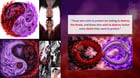
The “energy” of faith is impartial, but the specific belief one chooses is not.
In Korean, conviction is called *Sinnyeon* (신념) meaning belief, conviction, or faith, and refers to holding a firm certainty or a personal principle. It is not limited to religious faith; rather, it is a steadfast idea in which an individual deeply believes.
When the author established that “conviction” is the key to awakening one’s path, *Gil* (길) in Korean, corresponding to the Chinese *Tao* (道), the act of possessing conviction and transcending oneself takes on a much deeper significance.
In Eastern traditions, the elements are the attributes that compose both the world and human beings, directly influencing one’s mental reactions. Through meditation, it is possible to harmonize these forces. While the elements are typically fire, water, wind, and earth, there is one, in particular, that acts as a primary force.
This concept goes by various names: in Taoism, it is called *Xu* or *Wu* (Primordial Void / Non-being); in certain schools of Buddhism, it is referred to as *Ākāsa-dhātu* or *Śūnyatā* (Space / Emptiness), or as *Gong* / *Il-sim* (Void / Single Mind).
Essentially, it is the concept of “Space” or “Void”, a bridge that connects all things and the very space in which everything coexists. In meditation, the “inner space” is where emotional turbulence is resolved; such resolution requires self-transcendence, and those who transcend themselves possess “conviction.”
While conviction serves as a bridge connecting all domains (which function as the elements), the energy of this bridge can also be harnessed independently—as demonstrated by characters such as Kim Gapryong, Kim Kitae, Kim Gimyung, Jinrang, and Oh Dalyoung. There is something even deeper regarding the nature of conviction and the act of overcoming.
Much like the Tao and the concept of Yin and Yang, which illustrate that the universe contains inseparable cycles of order and chaos, the energy of conviction is entirely impartial and neutral.
Both polarities belong to the same flow and energy of nature (the Tao). Animals such as meerkats may protect their kin with great devotion to ensure survival, yet they also hunt, inflicting absolute despair upon their prey in the struggle to feed themselves.
Two opposing behaviors, yet a single underlying nature.
Yin and Yang represent both the energy itself and the vessel that receives a desired objective.
Desire can manifest through two distinct mentalities: the resolve to strive until death, or the pure intent to destroy.
The desire to protect is a personal aspiration, just as the desire to destroy is also a personal aspiration.
The Conviction to Kill (*Juk-il gago*): Faced with a cruel and unequal world, an individual may choose to destroy others, stopping at nothing regardless of the means or methods employed. In the "Fifth Affiliate" arc, Jang Hyun resorted to loan sharking and the destruction of countless families to safeguard his own; similarly, Seo Seong-eun sought to preserve his lifestyle at any cost, both were prepared to annihilate the "King of Suwon" without hesitation. In the same vein, Jiho embraced total destruction as a way to overcome the terror instilled in him by the violence he witnessed in prison.
The Conviction to Strive Until Death (*Jugeul gago*): Faced with a cruel, unjust, and unequal world, one may come to understand that the true response to such an unjust reality is not submission, but rather the determination to strive, to push oneself to the absolute limit, even unto death, in pursuit of one’s utmost potential. Hyung Suk chose to push himself to the point of death to protect the homeless man during the homeless arc; Lee Jin Sung embraced Ji Gongseob’s philosophy of believing in oneself, even while corrupted; and Oh Dalyoung still retained a "vestige" of the protector of Busan he once was, which he was able to tap into.
There is no such thing as an inherent "energy of good" or "energy of evil." "Good and Evil" do not reside within the energy of nature or one’s conviction; rather, they reside in what a person desires.
An example of this nature appears in Chapter 548, when Hyung Suk describes Kitae Kim as "despair incarnate." It is not the dark energy itself that is evil; what is evil is the objective for which that energy is used.
Dark energy is not "despair" itself, despair is simply Kitae’s theme, but the dark energy serves as the tool used to bring about that "despair."
Consider the case of Jinrang: after his desire (*sinnyeon*) to protect was shattered by Kitae, following the loss of his brothers, whom he failed to save, he channeled that same desire into a dark conviction.
Having lost his reason to fight for protection, his fist became "empty," creating space for a new desire (*sinnyeon*): one of vengeance and destruction directed at Kitae.
While Kitae uses dark energy to inflict despair, Jinrang seeks to use it for revenge, ultimately bringing "despair" upon the very person who wields it.
By shifting his focus, Jinrang began to spontaneously channel the same dark energy that Kitae manifests in his own fists, proving the inherent neutrality of this force.
The very same power that one individual uses to destroy the innocent is used by another to exact vengeance on behalf of the innocent. All of this is possible, after all:
“Those who wish to protect are willing to destroy the threat, and those who wish to destroy harbor some desire they seek to protect.”
This energy is the bridge and the fuel that makes this cycle of nature possible.
https://www.reddit.com/gallery/1x6t6ri
Source: r/PtjDiscussions · by /u/Fair_Struggle918