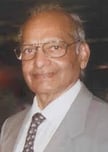
Among mathematicians whose careers span the second half of the twentieth century and the opening decades of the twenty-first, Hari Mohan Srivastava occupies an unusual position. His work does not belong neatly to one isolated branch of mathematics. Instead, it forms a large interconnected research program extending through special functions, hypergeometric series, generating functions, fractional calculus, integral transforms, complex analysis, geometric function theory, analytic number theory, (q)-series, orthogonal polynomials, approximation theory, and applied analysis.
This breadth is not simply the result of publishing in many different subjects. A recurring theme connects much of Srivastava's mathematics: the search for general mathematical structures that bring apparently separate formulas, functions and operators into unified families.
A classical identity may appear to concern Jacobi polynomials. Another concerns a hypergeometric series. A third arises from fractional integration. Srivastava's style has often been to discover a larger function, generating relation or operator from which these seemingly unrelated results appear as special cases.
His work has therefore been particularly influential in the vast territory lying between pure analysis and mathematical physics—the world of special functions and operators used to express solutions of differential equations and mathematical models.
The University of Victoria currently lists his research areas as real and complex analysis, fractional calculus and its applications, integral equations and transforms, higher transcendental functions, (q)-series and (q)-polynomials, and analytic number theory.
1. From Uttar Pradesh to an International Career in Mathematics
Hari Mohan Srivastava was born on 5 July 1940 at Karon in Ballia district, Uttar Pradesh, India. He studied mathematics at the University of Allahabad, receiving his B.Sc. in 1957 and M.Sc. in 1959. Remarkably, he began university-level teaching immediately after obtaining his master's degree, at only nineteen years of age. He subsequently completed his Ph.D. in 1965 while already working as a member of the teaching faculty at what is now Jai Narain Vyas University in Jodhpur.
In 1969 Srivastava joined the University of Victoria in Canada, initially as an associate professor. He became a full professor in 1974 and, following his formal retirement in 2006, continued there as Professor Emeritus.
The chronology matters because Srivastava entered mathematics during a period when the theory of classical special functions was being transformed. Hypergeometric functions, orthogonal polynomials and integral transforms had already been developed by figures such as Euler, Gauss, Jacobi, Bessel, Legendre, Mellin, Laplace and others. Twentieth-century mathematicians then began asking a different question:
Can these numerous special functions themselves be regarded as members of still more general mathematical families?
Much of Srivastava's career can be understood as one sustained answer to that question.
2. Special Functions as a Unifying Language
Special functions constitute one of the oldest bridges between pure mathematics and applications. Familiar examples include
[
\Gamma(z),\qquad J_\nu(z),\qquad P_n(x),\qquad {}_2F_1(a,b;c;z),
]
representing respectively the Gamma function, Bessel functions, Legendre polynomials and the Gauss hypergeometric function.
The importance of these objects comes from the fact that differential equations arising in physics frequently have solutions expressible in terms of special functions.
The generalized hypergeometric function,
\sum_{n=0}^{\infty}
\frac{(a_1)_n\cdots(a_p)_n}
{(b_1)_n\cdots(b_q)_n}
\frac{z^n}{n!},
]
already unifies a remarkable number of classical functions.
Here
[
(a)_n=a(a+1)\cdots(a+n-1)
]
is the Pochhammer symbol.
Srivastava spent decades exploring what happens when these constructions are extended to two, three or arbitrarily many variables.
This became one of the defining themes of his career.
3. Multiple Hypergeometric Functions
Ordinary hypergeometric functions depend on one variable. But problems involving partial differential equations and multidimensional physical systems naturally lead to functions of several variables.
The nineteenth-century mathematician Paul Appell developed important double hypergeometric functions, while Giuseppe Lauricella generalized the idea further.
Srivastava helped extend this program dramatically.
One retrospective account of his work credits him with the systematic investigation of a large collection of triple Gaussian hypergeometric series, including functions conventionally denoted
[
H_A,\qquad H_B,\qquad H_C.
]
His work also contributed to the theory of generalized multiple hypergeometric series capable of including Appell, Kampé de Fériet and Lauricella-type functions as special cases.
These constructions are significant because they provide a common language for identities that would otherwise need to be proved separately for many different functions.
A general function of several variables might look schematically like
\sum_{n_1,\ldots,n_r\geq0}
A(n_1,\ldots,n_r)
x_1^{n_1}\cdots x_r^{n_r},
]
where the coefficients (A) are built from Pochhammer symbols involving combinations of the indices (n_1,\ldots,n_r).
The challenge is not merely defining such a series. One must determine:
- where it converges,
- how it can be analytically continued,
- what transformations it satisfies,
- how it relates to known functions,
- what differential equations it solves,
- and what integral representations it possesses.
Srivastava worked on all of these kinds of questions.
For example, in work with Martha C. Daoust, he investigated generalized multiple hypergeometric series and their convergence domains. Their work developed extensions of Kampé de Fériet and Lauricella-type series.
The resulting Srivastava–Daoust hypergeometric function remains part of the literature on multivariable special functions and continues to appear in research concerning transformations and reduction formulas.
4. The Srivastava–Panda Multivariable H-Function
An even broader construction arose from Srivastava's work with R. Panda.
The classical Fox (H)-function, introduced by Charles Fox, is one of the most general special functions in mathematical analysis. Through suitable parameter choices it encompasses large families of hypergeometric and related functions.
Srivastava and Panda developed multivariable extensions of this theory.
This led to what is generally called the Srivastava–Panda multivariable (H)-function.
Its importance lies precisely in its generality.
Instead of solving separate integral identities involving dozens of special functions, one can sometimes establish an identity involving the multivariable (H)-function and obtain the others merely by specializing parameters.
This is characteristic of Srivastava's approach to mathematics:
[
\boxed{\text{Many formulas} \longrightarrow \text{one general structure}}
]
rather than
[
\text{one formula} \longrightarrow \text{one isolated theorem}.
]
Multivariable (H)-functions have subsequently appeared in investigations involving integral transforms, fractional calculus, probability, potential theory and mathematical physics. Work applying the Srivastava–Panda function to electrostatic-potential problems, for example, illustrates how an extremely abstract special-function construction can eventually enter applied mathematics.
Srivastava, K. C. Gupta and S. P. Goyal consolidated part of this theory in the 1982 monograph The H-Functions of One and Two Variables with Applications.
5. Generating Functions: One of Srivastava's Central Themes
Another enormous component of Srivastava's mathematical legacy concerns generating functions.
Suppose a sequence
[
a_0,a_1,a_2,\ldots
]
is given. Instead of studying every (a_n) separately, we package the sequence into
[
G(t)=\sum_{n=0}^{\infty}a_nt^n.
]
The properties of (G(t)) can reveal identities involving the entire sequence.
For polynomial systems, one commonly encounters
[
G(x,t)=\sum_{n=0}^{\infty}P_n(x)t^n.
]
Generating functions play fundamental roles in combinatorics, probability, number theory, orthogonal polynomials, differential equations and mathematical physics.
Srivastava developed an enormous body of work involving bilateral, bilinear, multilinear and multilateral generating functions.
Already in 1969 he published work on bilinear generating functions, and throughout subsequent decades he and collaborators developed systematic methods for constructing generating relations for classical and generalized polynomial systems.
His work with H. L. Manocha culminated in the substantial 1984 monograph
A Treatise on Generating Functions
a work extending to more than 500 pages and surveying and developing generating-function techniques across many areas of special-function theory.
The importance of these results lies not simply in producing identities. Generating functions allow information about an infinite family of functions to be manipulated simultaneously.
Differentiating a generating function may produce recurrence relations.
Integrating it may generate integral identities.
Multiplying generating functions can yield convolution relations.
Changing variables can produce transformation formulas.
Thus generating-function research becomes an operational method for discovering mathematics.
This methodological viewpoint is central to Srivastava's work.
6. Multiple Gaussian Hypergeometric Series
Srivastava's 1985 book with Per W. Karlsson, Multiple Gaussian Hypergeometric Series, became an important reference in multivariable special-function theory.
The ordinary Gaussian hypergeometric function
[
{}_2F_1(a,b;c;z)
]
is central to classical analysis. Generalizing it from one variable to several introduces a surprisingly complicated taxonomy of functions.
The Srivastava–Karlsson treatment brought together Appell, Lauricella and other multiple hypergeometric systems within a broader systematic framework.
Such functions arise naturally when separation of variables in a physical problem leaves more than one independent dimensionless parameter.
Consequently, multiple hypergeometric functions have appeared in areas ranging from mathematical physics to quantum chemistry. A 1987 paper by Srivastava, for example, studied generalized multiple hypergeometric series occurring in physical and quantum-chemical applications.
7. Fractional Calculus
Perhaps the area through which Srivastava is now most widely encountered outside classical special-function theory is fractional calculus.
Ordinary calculus introduces derivatives such as
[
\frac{d}{dx},\qquad
\frac{d^2}{dx^2},\qquad
\frac{d^3}{dx^3}.
]
Fractional calculus asks what it could mean to construct
[
D^{1/2},\qquad D^{3/2},
]
or, much more generally,
[
D^\alpha
]
for noninteger or even complex (\alpha).
Despite its name, fractional calculus is not simply a curiosity involving “half derivatives.” Fractional operators are valuable because they naturally describe systems possessing memory, hereditary effects and nonlocal behaviour.
A conventional derivative depends primarily on local behaviour.
Fractional derivatives can incorporate information from an entire interval of the function's past.
This makes them attractive in models involving anomalous diffusion, viscoelasticity, control theory, signal processing, transport phenomena and complex dynamical systems.
Srivastava worked extensively on generalizations and applications of classical fractional operators such as the Riemann–Liouville and Weyl operators, and on their relationships with special functions and differential and integral equations.
His contribution is particularly important because he helped connect two large subjects:
[
\boxed{\text{fractional operators}}
\qquad\longleftrightarrow\qquad
\boxed{\text{higher transcendental functions}}.
]
Many fractional differential equations have solutions expressible through Mittag-Leffler, Fox-Wright, hypergeometric or (H)-functions.
Srivastava repeatedly developed and emphasized these connections.
His later surveys discuss fractional-calculus operators based on the Fox–Wright function and related Mittag-Leffler-type functions, illustrating how special-function theory supplies the natural solution space for fractional differential equations.
This is a major reason his special-function research continues to be cited in modern fractional calculus.
8. Integral Equations and Integral Transforms
Srivastava also made substantial contributions to integral transforms and integral equations.
The prototype is the Laplace transform,
\int_0^\infty e^{-st}f(t),dt.
]
Integral transforms convert difficult differential or integral equations into forms that may be easier to solve.
Srivastava investigated generalizations involving special-function kernels, including transformations related to Whittaker functions and multivariable (H)-functions.
His research included explicit solutions of families of dual integral and dual series equations arising in potential theory, as well as unified treatments of generalized transforms.
The general philosophy again parallels his work on special functions.
Instead of studying
[
\int K_1(x,t)f(t),dt,
\qquad
\int K_2(x,t)f(t),dt,
\qquad
\int K_3(x,t)f(t),dt
]
as entirely separate problems, introduce a sufficiently general kernel
[
K(x,t;\alpha_1,\ldots,\alpha_m)
]
whose special parameter values reproduce (K_1,K_2,K_3,\ldots).
One theorem then generates many transforms.
Srivastava continued publishing on generalized Whittaker, Hankel and multidimensional transformations well into the twenty-first century.
9. Geometric Function Theory
Another substantial branch of Srivastava's work lies in complex analysis, especially geometric function theory.
One studies analytic functions such as
[
f(z)=z+a_2z^2+a_3z^3+\cdots
]
defined in the unit disk
[
|z|<1.
]
A fundamental question is whether (f) is univalent, meaning one-to-one.
Important subclasses include starlike, convex, close-to-convex and bi-univalent functions.
Srivastava and collaborators introduced or developed a remarkable collection of operators acting on analytic functions. Several now carry his name, including the
- Dziok–Srivastava operator,
- Srivastava–Attiya operator,
- Srivastava–Owa operator,
- Choi–Saigo–Srivastava operator,
- Srivastava–Wright operator.
The Dziok–Srivastava operator, introduced through convolution with generalized hypergeometric functions, provides a framework in which numerous previously studied operators appear as special cases.
The Srivastava–Attiya operator, meanwhile, is connected with the Hurwitz–Lerch zeta function and operates on analytic functions through Hadamard convolution.
These operators have subsequently been used to investigate coefficient inequalities, differential subordinations, superordinations, starlikeness, convexity and other geometric properties of analytic functions. The continued appearance of the Srivastava–Attiya operator in research on bi-univalent functions shows the durability of this framework.
10. (q)-Series and (q)-Polynomials
Srivastava has also worked extensively on (q)-analogues.
In (q)-analysis, classical mathematical objects are deformed by introducing a parameter (q), often in such a manner that the usual object returns as
[
q\to1.
]
For example, the ordinary integer (n) can be replaced by the (q)-integer
[
[n]_q=\frac{1-q^n}{1-q}.
]
As (q\rightarrow1),
[
[n]_q\rightarrow n.
]
This apparently simple modification leads into a deep theory connecting combinatorics, partition theory, special functions, orthogonal polynomials and mathematical physics.
Srivastava developed (q)-generating functions, (q)-polynomial identities and basic hypergeometric analogues of classical formulas.
The Srivastava–Agarwal basic generating function is among the mathematical constructions bearing his name.
The continuing presence of (q)-polynomials among his current research topics demonstrates how long this component of his program has persisted.
11. Analytic Number Theory
Although special functions dominate his reputation, Srivastava has also produced results related to analytic number theory.
These include work involving zeta functions, rapidly convergent series, harmonic numbers, binomial coefficients and computational representations of number-theoretic constants.
His publications include identities involving harmonic numbers and binomial coefficients and investigations related to Ramanujan's hypergeometric formulas.
The relationship is natural rather than accidental.
Analytic number theory repeatedly uses special functions:
[
\Gamma(s),\qquad
\zeta(s),\qquad
L(s,\chi),
]
together with hypergeometric and Mellin-transform methods.
Consequently, Srivastava's expertise in transformations and special functions provides tools that transfer naturally into number theory.
12. The Mathematics Named After Srivastava
One indication of Srivastava's influence is the unusually large collection of mathematical constructions associated with his name.
Published biographical surveys list objects such as
[
\text{Srivastava–Daoust function},
]
[
\text{Srivastava–Panda multivariable }H\text{-function},
]
[
\text{Dziok–Srivastava operator},
]
[
\text{Srivastava–Attiya operator},
]
[
\text{Srivastava–Wright operator},
]
[
\text{Srivastava–Gupta operator},
]
as well as several families of polynomials, generating functions and inequalities carrying Srivastava's name jointly with collaborators.
This diversity reveals something important.
Srivastava's contribution is not associated with one isolated theorem comparable to a single spectacular conjecture solved once and for all.
His achievement is better understood as construction of mathematical infrastructure.
He developed families of functions.
He generalized operators.
He found transformations.
He established generating relations.
He connected different branches of analysis.
Other mathematicians could then take these structures and develop further subclasses, inequalities, differential equations and applications.
13. The Importance of His Monographs
Srivastava's influence also comes through books.
Among his particularly important early monographs are:
Special Functions in Queuing Theory and Related Stochastic Processes with B. R. K. Kashyap (1982);
The H-Functions of One and Two Variables with Applications with K. C. Gupta and S. P. Goyal (1982);
A Treatise on Generating Functions with H. L. Manocha (1984);
and
Multiple Gaussian Hypergeometric Series with P. W. Karlsson (1985).
Together these books map much of his mathematical world:
[
\text{special functions}
\rightarrow
\text{generating functions}
\rightarrow
\text{multivariable functions}
\rightarrow
\text{integral transforms}
\rightarrow
\text{applications}.
]
For graduate researchers working before searchable online databases became universal, such monographs were particularly valuable because they gathered large numbers of scattered identities, definitions and transformations into systematic references.
14. Extraordinary Mathematical Longevity
Another striking feature of Srivastava's career is its duration.
His refereed research began in the early 1960s, while the University of Victoria's current publication page continues to list research from 2026 and forthcoming work for 2027. The university itself notes that its online listing does not contain all of his publications from the preceding decades.
Thus his active mathematical career extends across more than six decades.
During that period mathematics itself changed substantially. Symbolic computation, computer algebra, numerical analysis, fractional modelling and high-dimensional applications became vastly more important.
Yet special functions survived these transformations because many of the equations appearing in newer models still require precisely the analytical machinery developed in classical and generalized special-function theory.
Srivastava's work consequently sits in an interesting position: it is rooted in some of mathematics' oldest analytic traditions while simultaneously feeding modern subjects such as fractional differential equations.
15. Why Srivastava's Work Matters
Srivastava's mathematical importance can ultimately be understood through three ideas.
First: generalization
He repeatedly moved from a particular function or theorem toward a larger class containing it.
For him, the equation
[
\text{classical result}
\subset
\text{general result}
]
was itself a research strategy.
Second: unification
A successful generalized function is valuable only if it reveals relationships among previously separate objects.
The Srivastava–Daoust functions, multivariable (H)-functions, generating functions and generalized operators accomplish precisely this.
Third: transferability
Once a sufficiently general theorem has been established, researchers in other areas can specialize it.
A result developed initially in hypergeometric-function theory may later become useful in
- fractional differential equations,
- geometric function theory,
- approximation theory,
- mathematical physics,
- probability,
- integral transforms,
- or computational mathematics.
That portability is one of the strongest characteristics of Srivastava's work.
Conclusion: A Builder of Mathematical Frameworks
Hari Mohan Srivastava's career illustrates a form of mathematical achievement quite different from the popular image of mathematics as a succession of famous conjectures dramatically solved by isolated individuals.
His career has instead been devoted largely to building frameworks.
He expanded the theory of multivariable hypergeometric functions.
He helped develop the Srivastava–Daoust class of multiple hypergeometric functions.
He contributed to the multivariable (H)-function now associated with Srivastava and Panda.
He developed extensive theories of generating functions.
He helped connect generalized special functions with fractional calculus.
He worked on integral transforms, dual integral equations and operational calculus.
He and collaborators constructed operators that became standard tools in geometric function theory.
He investigated (q)-series, polynomial systems, analytic inequalities and number-theoretic identities.
And through books such as A Treatise on Generating Functions and Multiple Gaussian Hypergeometric Series, he helped organize large bodies of mathematical knowledge into forms usable by later generations.
The remarkable breadth of this program explains why an 880-page Springer volume published in his honour could contain work ranging across analytic number theory, approximation theory, special functions, combinatorics, inequalities and complex analysis.
If one wants a single phrase that captures Srivastava's mathematical style, therefore, it is unification through generalization.
He has repeatedly taken mathematical structures that already existed in narrower forms and asked how far their boundaries could be pushed:
from one variable to several variables,
from derivatives of integer order to arbitrary order,
from individual polynomial identities to generating functions,
from classical hypergeometric functions to higher transcendental systems,
and from isolated integral transforms to families of transform operators.
The resulting body of work forms a dense network connecting classical analysis with modern applied mathematics.
That is why Hari M. Srivastava is not merely notable for an exceptionally large number of mathematical publications. His deeper contribution is that many of those publications belong to a recognizable intellectual project: constructing a more general analytical language in which large families of mathematical functions, identities, operators and equations can be studied together rather than separately.
In special-function theory and fractional analysis particularly, that language continues to be used
https://i.redd.it/fpfpbrwtigrh1.jpeg
Source: r/IndicKnowledgeSystems · by /u/RossbihariGhost1900